
Aperture
The aperture is an iris fitted inside a lens. It can be varied in size to control the amount of light reaching the sensor. However, the aperture is not smoothly changeable. It is adjusted in discrete stages known as f/stops. F/stops are shown as f/ and a suffix number. A common range of f/stops on a lens is f/2.8 – f/4 – f/5.6 – f/8 – f/11 – f/16.Slightly counterintuitively, the larger the number the smaller the aperture size – f/2.8 in the sequence above is a larger aperture than f/16. (This is because f/stops are fractions. If you think of the f/stops as fractions: 1/2.8 or 1/16 it may help to make aperture size more logical.)
As with shutter speeds, each whole f/stop value in the sequence above represents either a doubling or halving of the amount of light – a stop’s difference in fact. Read the sequence from left to right (f/2.8 – f/4 etc.) and each jump sees the amount of light reaching the sensor halve. Read the sequence from right to left (f/16 – f/11 etc.) and each jump sees the amount of light reaching the sensor double. (As with shutter speed, cameras let you set values between those listed above. These are 1/3 or 1/2 stop values, depending on the lens or camera.)
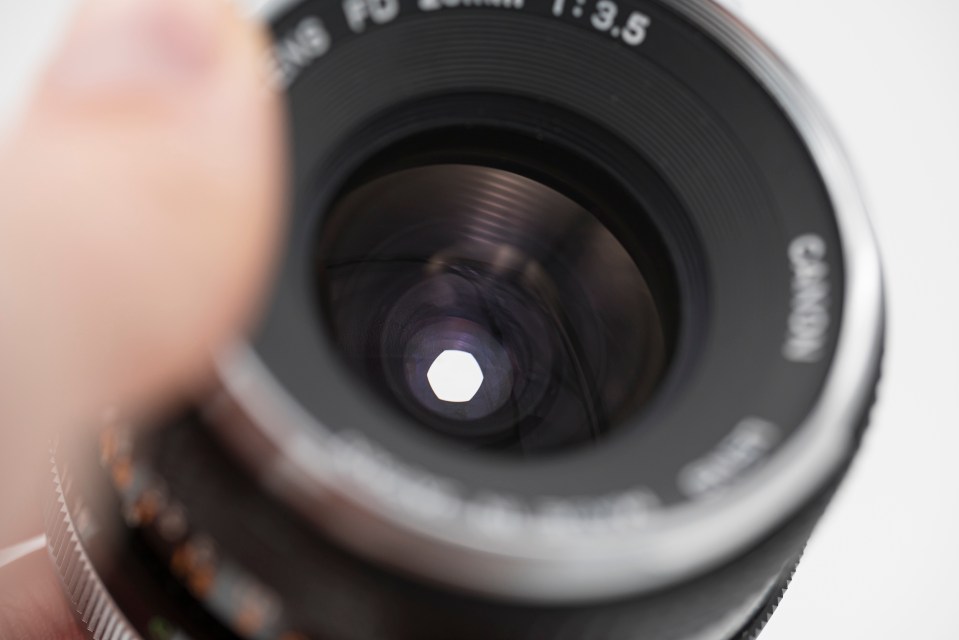
The aperture has another, more subtle function, than controlling exposure. It also affects the amount of acceptable sharpness in an image. This is known as depth of field. The focus point of is always the sharpest place in a photo. However, by making the aperture smaller, a zone of sharpness – the depth of field – extends out from the focus point. The expansion of depth of field occurs in both directions, both back towards the camera from the focus point, as well as further away into the distance. However, this expansion is not equal. Depth of field increases more away from the focus point than it does in front. (The split is roughly 1/3 to 2/3, so there is always far more depth of field behind the focus point than in front.)
How much depth of field do you see at a particular aperture? It is a question that unfortunately is not that simple to answer. Depth of field is determined by three factors: the aperture the lens is set to; the focal length of the lens; and the focus distance. Change any one of those variables and the extent of depth of field will alter.
Say you set aperture to f/8. This is a useful, mid-range aperture that, on a wide-angle lens would result in a very useful degree of depth of field. However, use a longer lens – a standard lens say – at the same aperture and the depth of field will have noticeable diminished. The longer the lens, the less the depth of field. When using a particularly long telephoto lens you may find that f/8 barely creates any depth of field at all. The practical upshot is that you will find yourself using smaller apertures on longer lenses in order to achieve the required depth of field. (Or, when using telephoto lenses, be resigned to the fact that some parts of the shot will be soft and out-of-focus.)
The closer you focus, the less depth of field there will be at any given aperture. For a lot of photos, when your subject is several metres or more from the camera, this will not be an important. However, shoot close-ups or even macro then depth of field will minimised. This is particularly apparent when shooting macro, when only a thin sliver of sharpness may be possible, even when shooting close or at the minimum aperture.
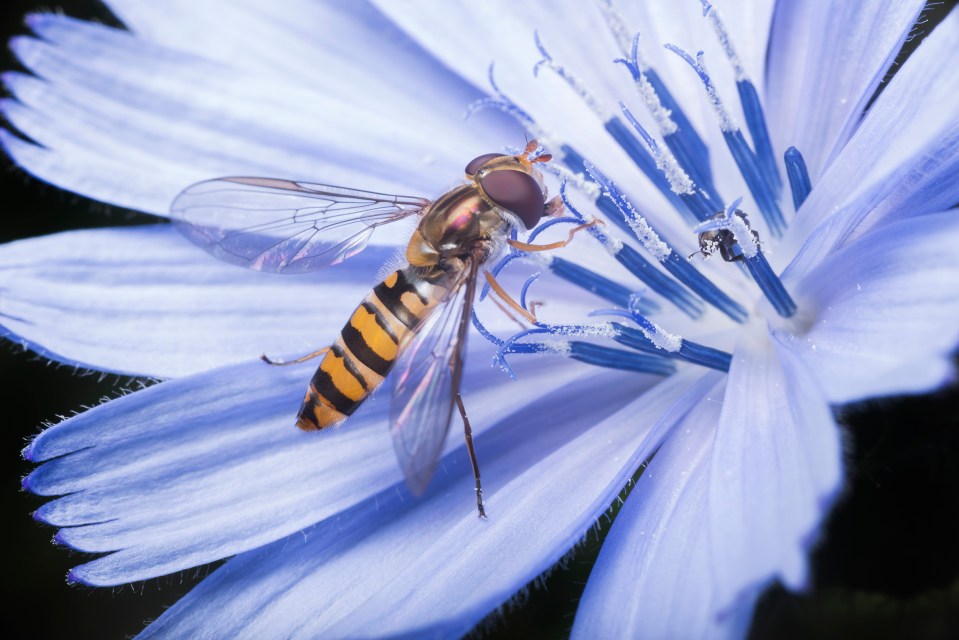
That all said, it is possible to get too obsessed with depth of field and image sharpness. Your subject is the most important element in a photo and you should concentrate on ensuring that is sharp with accurate focusing. There is also a lot to be said for deliberately shooting so that only your subject is sharp, as this will help to draw the eye directly to the subject. (This is easier with longer lenses set to their maximum, which is why telephoto lenses are frequently used for subjects such as portraiture.)