
Tripods
Photographers tend to fall into two camps when it comes to tripods. Some use them all the time – generally landscape photographers – others rarely, or even never use them – documentary photographers, for example. A tripod is designed to be a stable support for a camera. This is necessary when shutter speeds drop to a level where camera shake may become an issue – when light levels are low, or when using light-sapping filters (see lesson six).
Unfortunately, not all tripods are equal. Some barely hold a camera steady thanks to poor construction or design. A lightweight plastic tripod will be cheap, but it may wobble in anything but the gentlest breeze. (The size and weight of your camera and lenses will determine whether a tripod is steady too. You may get by combining a lightweight tripod and compact camera. The same tripod might wobble like a jelly when a DSLR is fitted.) That said, you do not want a tripod that is so heavy that you are put off carrying it around.
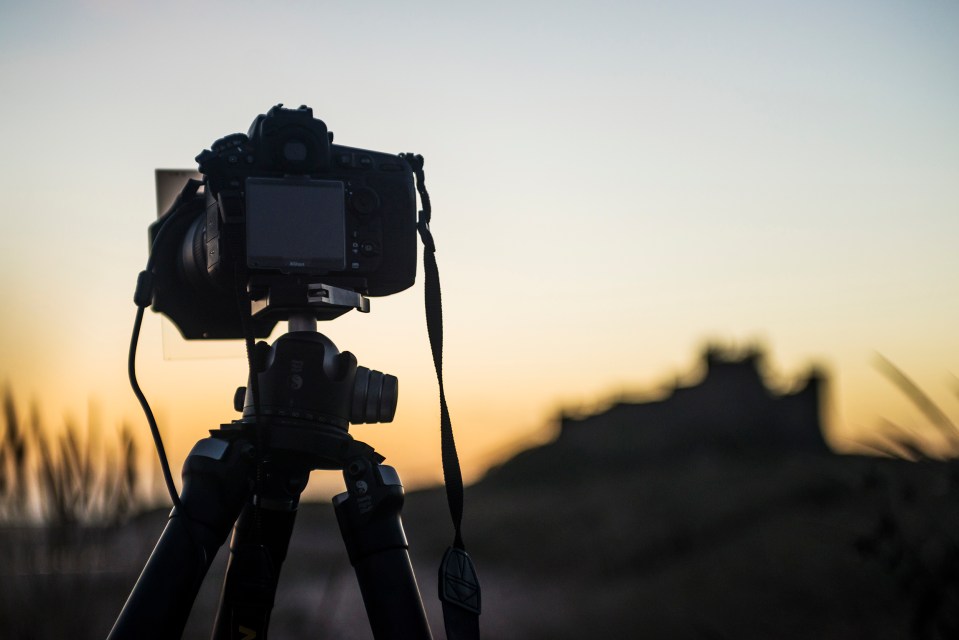
Tripods are generally made of one of three types of material: plastic, metal or carbon-fibre. (Tripods were traditionally made from wood, and wooden tripods can still be found but they are very uncommon.)
Plastic tripods are typically the cheapest of the three types, and usually the least stable. That should not put you off buying one though, ultimately – when it is needed – any tripod will be better than no tripod. Metal tripods are usually made of aluminium, and are considerably heavier than a tripod made from plastic. It is this weight that makes them very stable, but obviously less convenient or pleasant to carry around all day. In terms of weight, carbon-fibre tripods fall between plastic and metal. However, they are still very stable and can support heavy camera equipment. The one drawback to carbon-fibre tripods is the cost; they are typically twice as expensive as a comparable metal tripod.
Ideally a tripod should come up to your eye level when fully extended. (If this can be achieved purely with the legs only and without raising the centre column, so much the better.) However, the longer the legs of a tripod, the heavier it will be. As with most aspects of photography you may need to compromise one way or the other. One design feature to look closely at is the number of leg sections a tripod has. The more leg sections a tripod has, the shorter it will typically pack down to. However, it will also take longer to set up, and may well be less stable than a similar tripod with fewer leg sections.
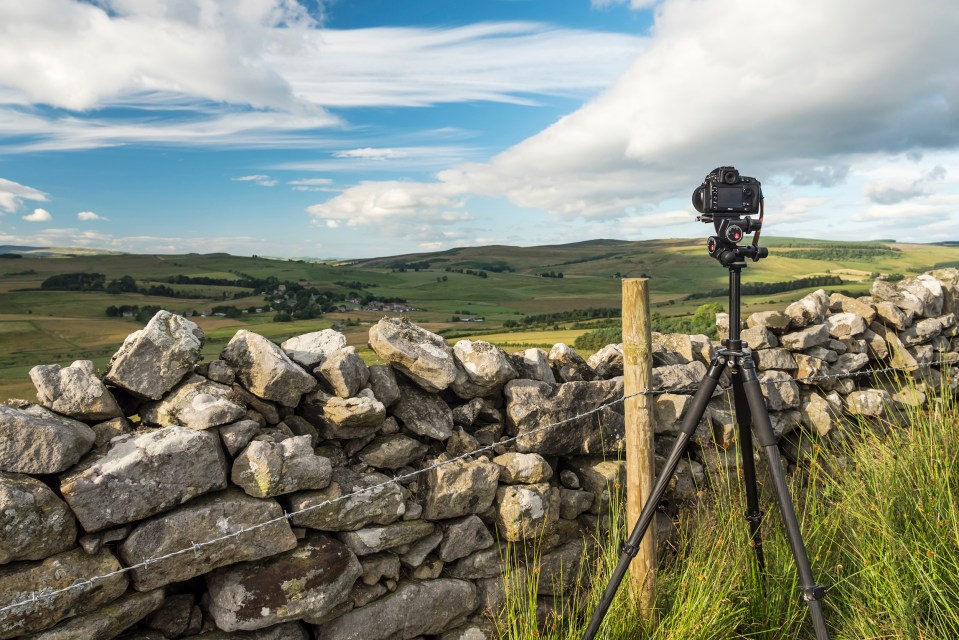
You can either buy a tripod as a complete unit, or buy the legs and heads separately. The benefit of second option is that you can configure your tripod exactly how you want it. There are three common types of head: the three-way head, ball-head, and geared head. The three-way and geared head can both be adjusted in three different axes. Geared heads offer more precise movement, but at greater expense and weight. A ball-head has a ball-and-socket joint allowing free movement in any direction, though this does make it more difficult to make fine adjustments to position. One big thing in favour of ball-heads is their excellent weight-to-strength.
A tripod is only as good as the way you use it and there are many ways to use it incorrectly. If your tripod is not stable then your camera will not be either. Ideally the centre column should always be at 90° to the floor or ground. This means extending all three legs equally or, if on uneven ground, extending the legs to compensate for the unevenness. Ultimately, you want to avoid the possibility of the tripod shifting or even tipping over when you fit your camera on to it. (If the ground is soft, such as sand, it is a good idea to push the tripod down gently so that there is no danger of it slowly sinking as you shoot.)