
Flash
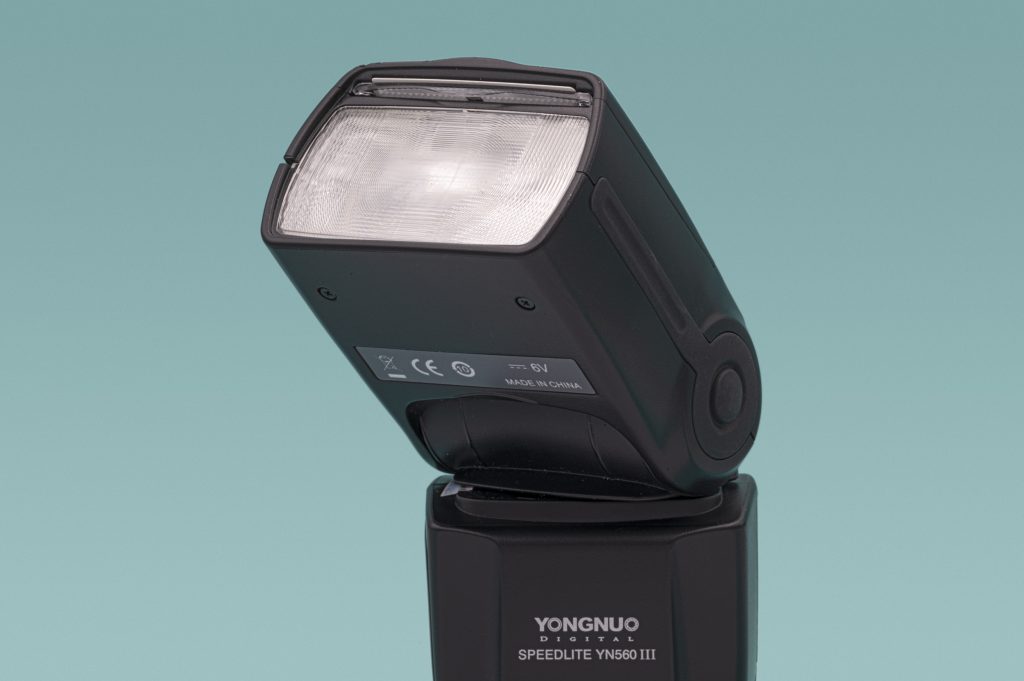
Some, but not all, cameras have built-in flash. However, all system, bridge and some compact cameras have a mount – known as a hot shoe – to which you can add a flashgun. (In photography there are cold and hot shoes, both of which are types of flashgun mounts. The difference is that a hot shoe has an electronic connection to fire or control the flash, a cold shoe does not.)
Flash is useful to add extra light into a scene, occasionally necessary when shooting interiors or in low ambient light. Flash can also be used as a fill light to reduce contrast when your subject is backlit (see lesson seven). The power of a flashgun is shown by its Guide Number (or GN). The higher the GN, the more powerful the flashgun and the greater its potential effective range.
A flash built into a camera is either fixed in position, or pops up when activated. This means you have very little control over the direction of the light emitted by the flash. The same is true of cheaper flashguns, though these are typically far more powerful than built-in flash. The most useful external flashguns are those with moveable heads. These allow you to angle the head and alter the angle that light is emitted, and so how it falls on your subject. (This can be used for a technique known as bounce flash, where light from the flash is reflected off a wall, ceiling or other surface to create a soft light illumination (see lesson seven for more about the softness or hardness of light).
Flash exposure can either be controlled automatically by the camera, using its through-the-lens (or TTL) mode, or manually by adjusting the power setting of the flash. TTL makes using flash far easier, manual flash exposure is more involved and requires using a handheld exposure meter, or shooting numerous test shots until the flash power setting is correct.
Taking a flashgun off-camera increases the scope lighting your subject creatively. You can either connect the camera and flash using a cable, or wirelessly with a wireless compatible camera/flash combination. Wireless flash comes in two forms: optical and radio. An optical system uses two flashes, one mounted to the camera (known as the slave flash) that fires an infra-red beam that triggers the off-camera flash (the master). Optical systems generally support TTL, though line-of-sight must be maintained between the two flashes. This places a limit on where the master flash can placed. Optical flash also has a relatively short range too, particularly outdoors. Radio flash uses a radio trigger mounted on the camera hot shoe to fire the off-camera flash. This means that the distance between the camera and flash can be greater, and they do not need to ‘see’ each other either. The drawback to radio triggering is that TTL is not always supported, only manual flash exposure.