
Shutter Speed
There are two camera controls that regulate how much light reaches the sensor: shutter speed and aperture. Shutter speed is a measure of time. The shutter inside a camera is essentially a curtain that can be raised and lowered for a specific period of time, determined by the shutter speed selected automatically either by the camera or by you. Cameras vary in the range of shutter speeds available. The most highly specified cameras can shoot at a top speed 1/8000 of a second. Although lowlier cameras often top out at 1/4000, this is still more than fast enough for most shooting situations. At the slower end of the range, most system cameras can hold their shutter open for thirty seconds, or indefinitely when Bulb is selected (see lesson four).

Shutter speeds vary by set amounts, such as 1/2000 – 1/1000 – 1/500 – 1/250 – 1/125 and so on. The difference between each of these shutter speeds is known as one ‘stop’. Read the shutter speeds from right to left (1/125 – 1/250 etc.) and each stop’s difference represents a halving of the amount of light reaching the sensor. Read from left to right (1/2000 – 1/1000 etc.) and each stop’s difference represents a doubling of the light reaching the sensor. (You may have noticed that your camera has values between those shown above. These are 1/2 or 1/3 values and allow for greater control over exposure.)
If your subject is moving you will need a fast shutter speed if you want to ‘freeze’ that movement. The shutter speed required depends on a number of factors such as the speed of the movement, and the size of the subject in the frame. Essentially, the faster the movement or the larger the subject is in the frame, then the faster the shutter speed will need to be. If your subject is moving across the image frame you will also need a faster shutter speed than if it was moving towards or away from the camera. See the table below for suggested shutter speeds for a range of subjects.
| Subject (moving across the frame) | Filling Frame | Half-filling Frame |
|---|---|---|
| Person: walking slowly | 1/125 | 1/60 |
| Person: walking quickly | 1/250 | 1/125 |
| Person: running | 1/500 | 1/250 |
| Person: cycling | 1/500 | 1/250 |
| Horse: galloping | 1/1000 | 1/500 |
| Car: travelling 20-40mph/32-64kph | 1/500 | 1/250 |
| Car: travelling 50-70mph/80-112kph | 1/1000 | 1/500 |
| Train | 1/2000 | 1/1000 |
| Jet aircraft | 1/4000 | 1/2000 |
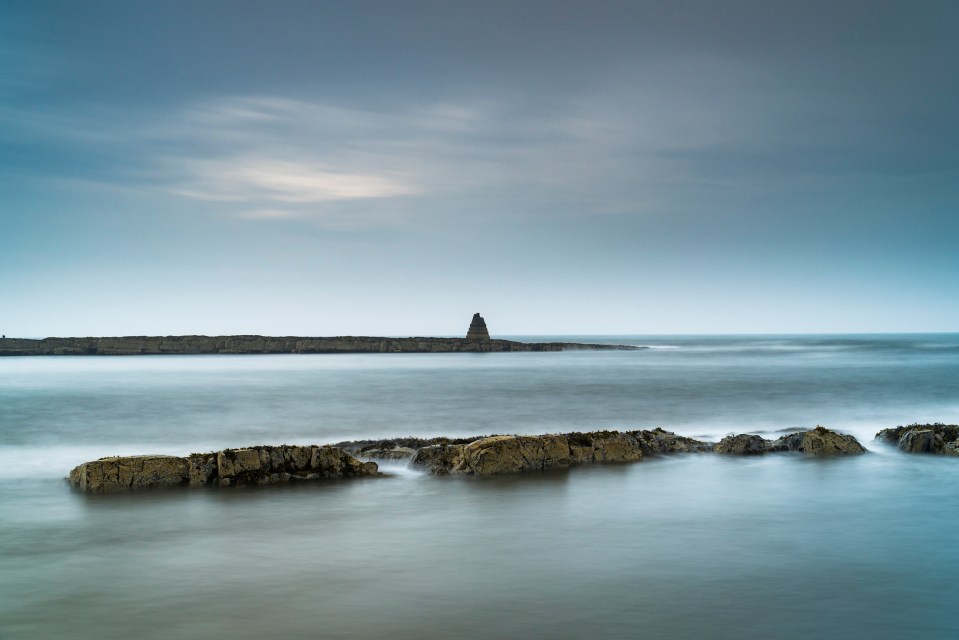
However, freezing movement with a fast shutter speed can make your subject look strangely static. Slowing the shutter speed down introduces blur, which can help strangely convey movement and speed more effectively. You can even go to the opposite extreme and use a long shutter speed to blur and soften your subject to create an impressionistic effect. See the table below for suggested shutter speeds. (Though this effect can be pushed too far. With a sufficiently long shutter speed your subject may even vanish from the photo entirely.) Achieving long shutter speeds may not be possible due to the levels of ambient light. This is when filtration becomes necessary to reduce the amount of light reaching the sensor. This allows the use of slower shutter speeds without overexposing the photo.
| Subject | Shutter Speed |
|---|---|
| Waterfall | 1/4 second |
| Fireworks: short trail | 1 second |
| Waves: detail retained | 1 second |
| Wind-blown foliage: slight blurring | 2 seconds |
| Waves: detail lost | 15 seconds |
| Fireworks: long trail | 15 seconds |
| Wind-blown foliage: heavy blurring | 30 seconds |
| Traffic trails | 30-60 seconds |
| Waves: misty quality | 1-2 minutes |
| Moving clouds: heavy blurring | 2-3 minutes |
| Star trails | 10 minutes + |
Another way shutter speed can affect your photos is through camera shake. This is an image fault caused when the camera moves during an exposure. It is typically seen when using a slow shutter speed and when the camera is being handheld. The shutter speed that causes camera shake varies depending on a number of factors. The first is how steady you are! You may have a grip of iron, but this can be undone by standing on an unsteady surface, such as sand, or if you are being buffeted by a strong wind. Ideally, when you take a photo you should stand as straight as possible. Then you should support your camera with one hand on the grip, the other under the lens. Keep your elbows tucked lightly into your sides, and gently press down on the shutter button rather than stabbing at it.
Another factor that causes camera shake is the focal length of the lens: the longer the focal length, the greater the risk of camera shake. A very rough and ready rule is to set the shutter speed so that it matches or is greater than the focal length of the lens. So, when using a 200mm lens, you should set a shutter speed of 1/200 or faster. (Image stabilisation, that either shift lens elements or the camera’s sensor, compensates for small movements you may make. It has made this rule slightly less relevant, but it is still a good guide to bear in mind.)