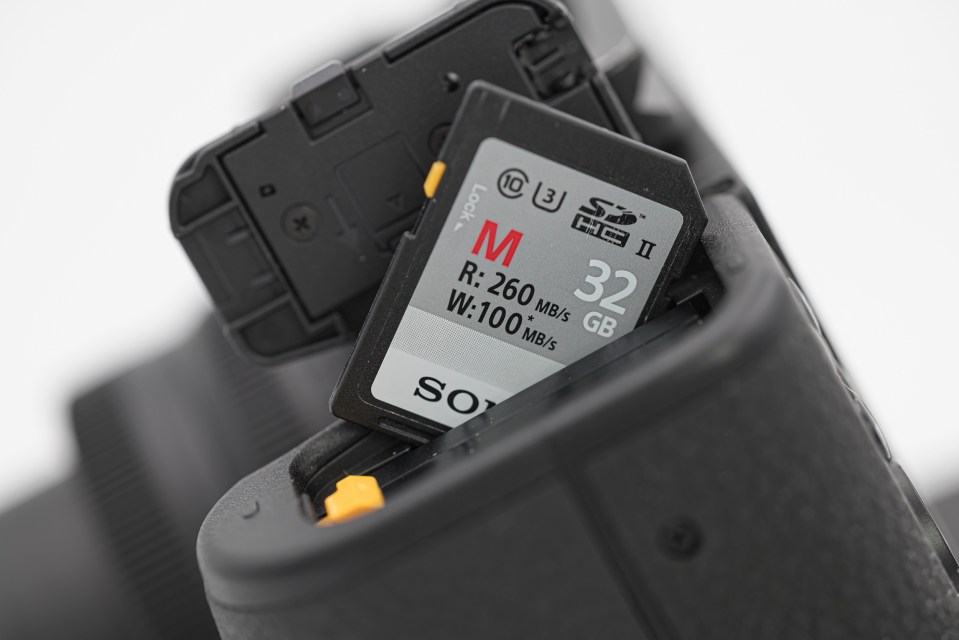
Memory Cards
One vital bit of equipment is a memory card. Without one you cannot save your photos (or movies) as you shoot. Currently the most common type of memory card is the SD memory card, though another type – XQD/CFexpress – is slowly gaining support from camera manufacturers. There are two important aspects of a memory card: its capacity and its read/write speed.
The higher the capacity of a memory card, the more photos or movies you will be able to store on it. There is a lot to be said for buying the largest memory card you can afford (particularly if you intend to shoot movies too – video requires a lot of storage space). However, some photographers prefer to buy multiple, smaller capacity memory cards and swap them round when they are full. Memory cards are not indestructible and can suffer rare but catastrophic failure. The choice is whether to put all your photographic eggs in one basket or spread the risk – and your photos – across multiple memory cards.
The higher the read/write speed of a memory card, the faster that photos and movies can be written to and from it. Ideally you should buy the fastest memory card you can. Unfortunately, you pay for speed – fast memory cards are always more expensive than their slower cousins. Slow memory cards will take longer to clear a camera’s buffer (see lesson four), and take longer to copy files to your PC or tablet too. However, if you only shoot static subjects and are patient when it comes to copying files, then a slower – and cheaper – memory card will make sense. However, if you are the type who likes to shoot sports and/or movies then a fast memory card will be a must.
The speed of SD memory cards is often shown as a Class Rating. Higher Class Ratings – up to a maximum of 10 – indicate a faster read/write speed. Memory card speeds are also often shown as a number followed by MB/s. This indicates the number of megabytes per second that files can be written to the card. A memory card that can write at 60MB/s (or higher) will be sufficient for most types of shooting, including movies. (The figure on a memory card is typically the write speed. The read speed of memory cards is generally lower, but this is only important when you copy files from the card, not when shooting.)