
Filters
Not every photographer needs to use filters – documentary photographers, for instance – but they are useful for certain types of photography, such as landscape photography. Filters fall into two basic categories: effects and exposure adjustment. Effects filters alter the light passing through them to create a particular visual effect. Star filters, which refract point light sources such as streetlights to create a colourful star pattern, are one such filter. Exposure adjustment filters alter the exposure of an image. Neutral density filters, which lengthen shutter speed, are a good example of this type. (See lesson six for more information).
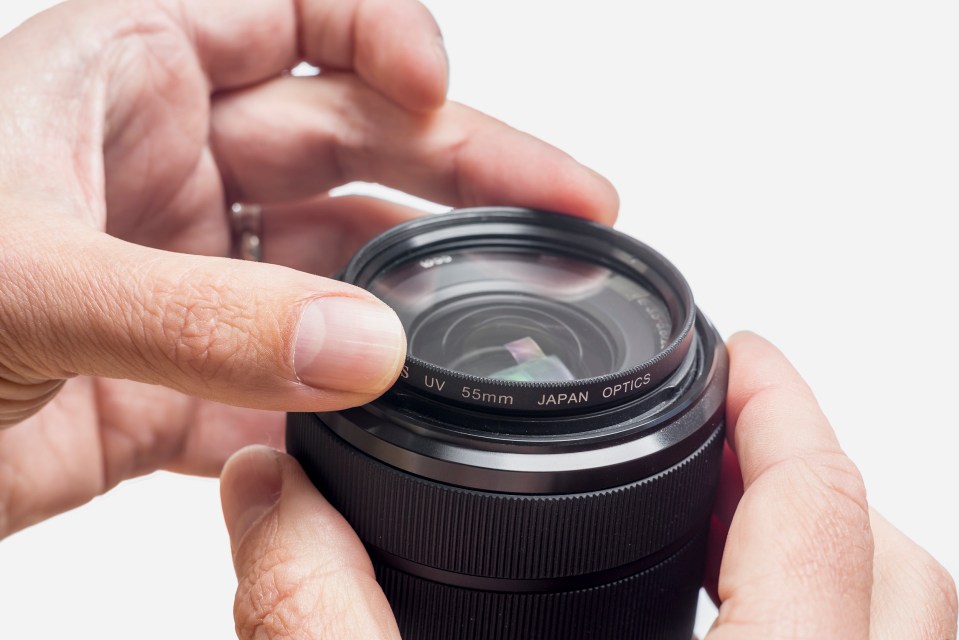
Filters can be bought in one of two different forms: screw-in or square to fit into a filter holder. Both approaches have advantages and disadvantages. Screw-in filters are fitted to the filter thread on the front of a lens. Unfortunately there is no one common filter thread size. Unless you are very lucky, this becomes immediately apparent if you have more than one lens. This can be an expensive problem as your lens collection grows. One solution is to buy a filter for the lens with the largest filter thread and buy step-up rings to convert the filter for use on the other lenses. (Step-up rings allow the use of large filter on a lens with a smaller filter thread size. Step-down rings are used to convert a small filter to lens with a larger filter thread size. However, this is not recommended as it can result in mechanical vignetting. See lesson two.)
Filter holder systems are a more flexible solution, though they are initially more expensive than screw-in filters. Filters holders are attached to a lens via an inexpensive conversion ring fitted to the filter thread. Whenever you buy a new lens you only have to buy the relevant conversion ring. The filters you buy slot into the folder. (There are several sizes of filter holder, such as 75mm or 100mm. You have to buy the right sized filter for the holder, but filters made by different manufacturers – as long you buy the right size – generally fit into their rivals’ filter holders.) Typically you can fit at least two filters into a filter holder, though image quality can drop if you place too many filters in front of a lens.