
Sensor Size
Sensor size is an important aspect of a digital camera. There is a wide range sensor sizes used in cameras, from some that are no bigger than a finger nail all the way up to 54 x 40mm medium-format sensors. There are three common sizes used in system cameras. In size order they are: Micro Fours Thirds (17.3 x 13mm), APS-C/cropped (23.7 x 15.6mm) and full-frame/35mm (36 x 24mm). (For comparison, sensors used in camera phones are generally around 5.8 x 4.3mm in size.)
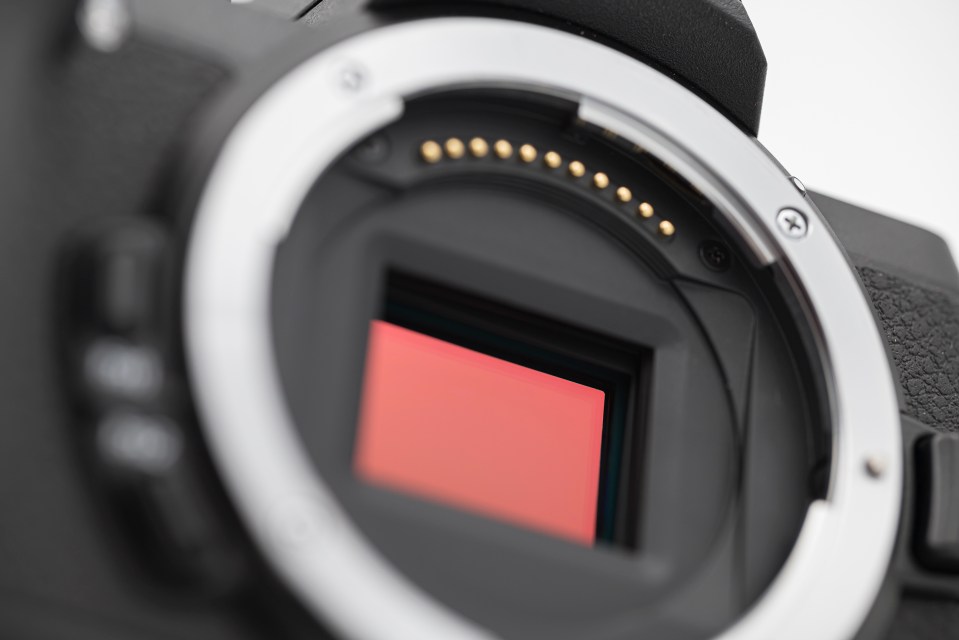
A camera with a smaller sensor can be made small and light. (These is immediately obvious if you place a Micro Four Thirds camera next to an equivalent full-frame camera.) The drawback to a small sensor is that the individual photodiodes on the sensor need to be small too. A photodiode is essentially a ‘bucket’ that collects photons of light during an exposure. (The resolution of a camera – the number of pixels it has – indicates how many photodiodes there are on a sensor. A 24mp camera has 24 million photodiodes.) Compared to a larger sensor with the same number of photodiodes, smaller sensors will typically have a smaller dynamic range and more image noise at a given ISO (see lesson six for explanations to both).
You might now be thinking that it is therefore better to own a full-frame camera with its big sensor. However, large sensors are difficult to manufacture and are therefore costly to produce. This cost is reflected in the price of full-frame cameras compared to APS-C or Micro Four Thirds cameras. (Though there are exceptions to this rule.) As with any decision you make when you buy a camera, there is ultimately a trade-off between cost, convenience and your own specific personal needs.