Wide-Angle Lenses
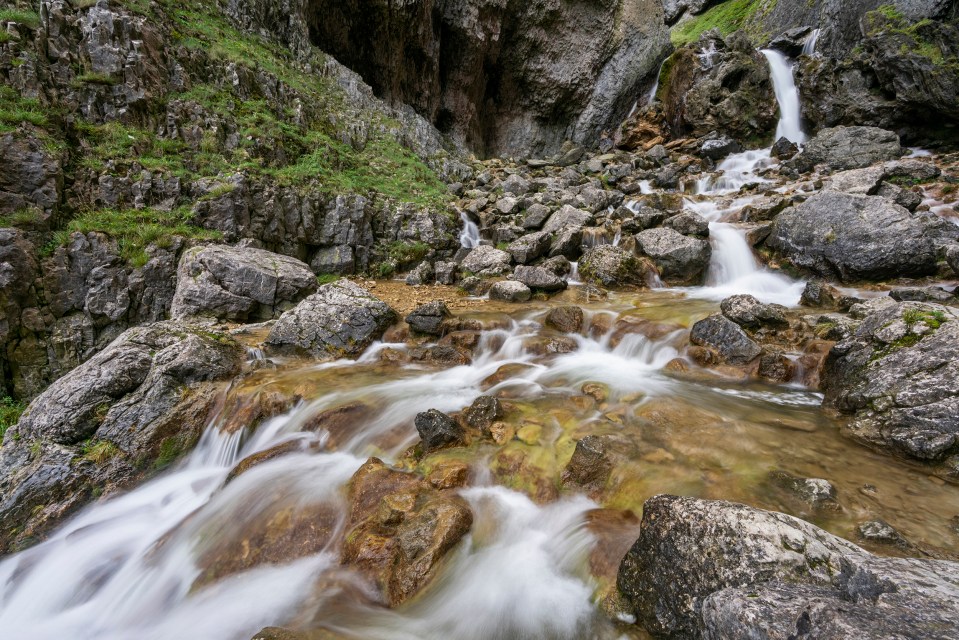
The widest lenses available are called fisheye lenses and project a 180° view – effectively from one side of the camera to the other. Typically though, wide-angle lenses have an angle of view between 84° and 63°. (24-35mm on a full-frame camera, 16-23mm on an APS-C camera, and 12-17mm Micro Four Thirds.) Wide-angle lenses are commonly used in landscape photography to help convey the wide-open qualities of the landscape. They can also be used for documentary photography and portraiture, typically to show your subject in the context of their surroundings.
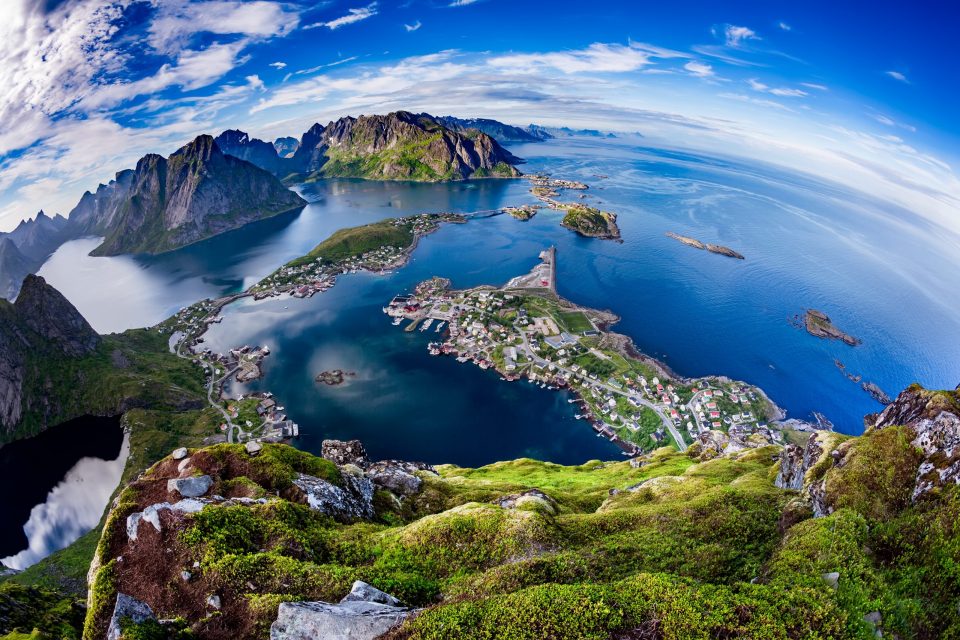
A visual effect of wide-angle lenses is that the spatial relationships between the various elements in a photo are exaggerated. This can be seen most readily when you look at the background, which will appear far smaller and further away than it does to the eye. You typically have to get very close to your subject when shooting with a wide-angle lens, otherwise it will appear relatively small in the frame. (Which is why they are good for showing your subject in the context of its surroundings.) You would not use a wide-angle lens to shoot a head-and-shoulders portrait shot for example. Because you need to get so close, your subject’s facial features will be distorted, creating a distinctly unflattering effect that your subject will not thank you for.